
Mystic Seaport: The Museum of America and the Sea™
Increase Font Size
Decrease Font Size
Email Page
Print Page
image

The original Global Positioning System.

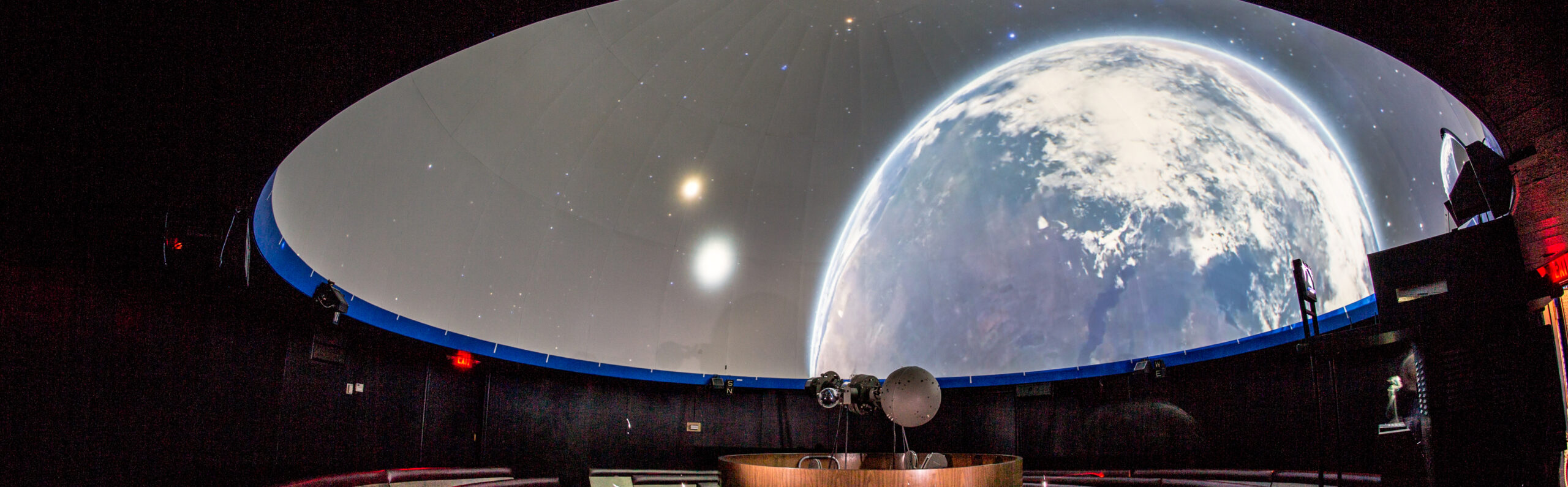
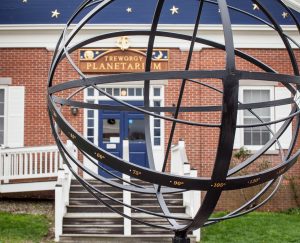
To you, they’re pretty. To sailors, they were the difference between life and death. And in the Planetarium at Mystic Seaport, you can get a lesson in celestial navigation using the stars, planets and heavenly bodies of the season. The Planetarium itself was designed specially for Mystic Seaport by Armand Spitz in 1960.

Daily Programs

Each season the Planetarium daily program shows you how to locate and identify the stars, planets and constellations in the sky at that time of year. These live programs last about 30 minutes and include a few basic points about using the stars for navigation. Slide projectors in the planetarium are used to show images of special interest. Different programs and presentations are offered throughout the year, from “Finding Your Way By the Stars” to “Night Lights for the Holidays.”

Inside the Planetarium

The stars and planets are projected overhead onto the surface of a thirty-foot diameter dome. About 750 can be shown. The planets, sun and moon are projected by individual lights.

Other special effects that can be projected are: a geo-centric view of the Earth, circles, triangles, meridians and coordinate grids for navigational purposes.

Lobby Exhibit

The lobby of the planetarium holds a permanent exhibit on 19th century navigation. From the ceiling hangs an orrery, or a mechanical scale model of the solar system. In addition, an interactive computer makes astronomy and navigation come to life.

The celestial navigation exhibit in the lobby is divided into six stages. By going through the exhibit, one can learn how sailors in the years before GPS found their destination.

Exhibit Elements

  • Round Earth to Flat Map
    This section of the exhibit details the process of making a flat chart from the world which is round. It includes a discussion of different types of maps and points out some of the advantages and disadvantages of each type.
  • Direction and Dead Speed Reckoning
    In order to know where your ship is located, you must know the direction you are traveling and the distance you have moved. Finding the direction was easy with the use of a compass, but finding speed, or distance covered, was more difficult. Sailors would let out a log on a rope and measure how much of the rope had been pulled off the ship in 14 seconds. Then, they could compute how fast they were traveling and the distance that they had traveled. This reckoning was subject to error from currents and wind.
  • Measuring an Angle
    The primary tool in celestial navigation is a sextant. This is a protractor which measures the angle from the horizon to a celestial object. If sailors knew the angle their ship was from a few specific stars, and knew where the stars were located, they could pinpoint their position in a vast ocean.
  • Finding the Latitude
    This part of the exhibit contains a combination LORAN and Global Positioning System or GPS receiver, and contrasts our modern day means of finding our location with the process sailors had to go through years ago. The Nautical Almanac from 25 December 1844 is on display, showing the sun's declination which must be combined with the sextant angle for calculating the latitude of the Charles W. Morgan.
  • Finding the Longitude
    This section of the exhibit shows the importance of accurate timekeeping in finding longitude. If sailors had accurate chronometers they could keep Greenwich Mean Time. Then, using a sextant to measure the angle of the sun, they could, with numbers from the nautical almanac, determine where their ship was.
  • You be the Navigator
    In this final section of the exhibit, a sextant is set up against a wall with the sun and horizon painted on it. You can use the sextant to find the angle from the sun to the horizon.

The Orrery

On the ceiling of the planetarium is an Orrery or mechanical scale model of the solar system. Mercury, Venus, Earth, Mars, Jupiter, Saturn, Uranus, and Neptune are shown.

The sun should be at the center, but cannot be shown because of the compressed-distance scale used in the Orrery. Made to the same scale as the planets, the sun would be over seven feet in diameter! Pluto is too far from the sun, on this scale, to be included.

Orrery Scales

Diameters of the Planets1 inch = ten thousand miles
Distances of the Planets1 inch = fourteen million miles
Time Scale1 minute = eighty-eight days


Activities for Visitors
A computer running the Earth Today program from the Connected CD-Rom prepared at Rice University, will give you access to photos and information about the wonders of the planets.

© 1998-2008 Mystic Seaport. All rights reserved.